Cutting down poison ivy and thinking the job is done is one of the most common mistakes homeowners make. Within a season, and often sooner, the plant comes back, sometimes thicker and wider than before. If you have been dealing with this cycle, you are not alone. Poison ivy control in Delaware Valley is a genuine problem for residents across the region, and the reason it keeps returning is almost always the same: the roots were never fully addressed.
Why Does Poison Ivy Keep Coming Back After Removal?
Poison ivy is a perennial with an extensive underground root system that spreads through rhizomes, which are horizontal root structures that send up new growth from multiple points. Leaving even a small fragment of root behind is enough for the plant to regenerate. On top of that, birds feed on the plant's white berries and drop seeds across your property, which means new plants can appear in areas you never touched.
DIY removal tends to address what is visible above ground while leaving the root network largely intact. That is why most homeowners who pull or cut poison ivy without treating the roots find themselves dealing with the same infestation the following year.
What Does Professional Poison Ivy Control Actually Do Differently?
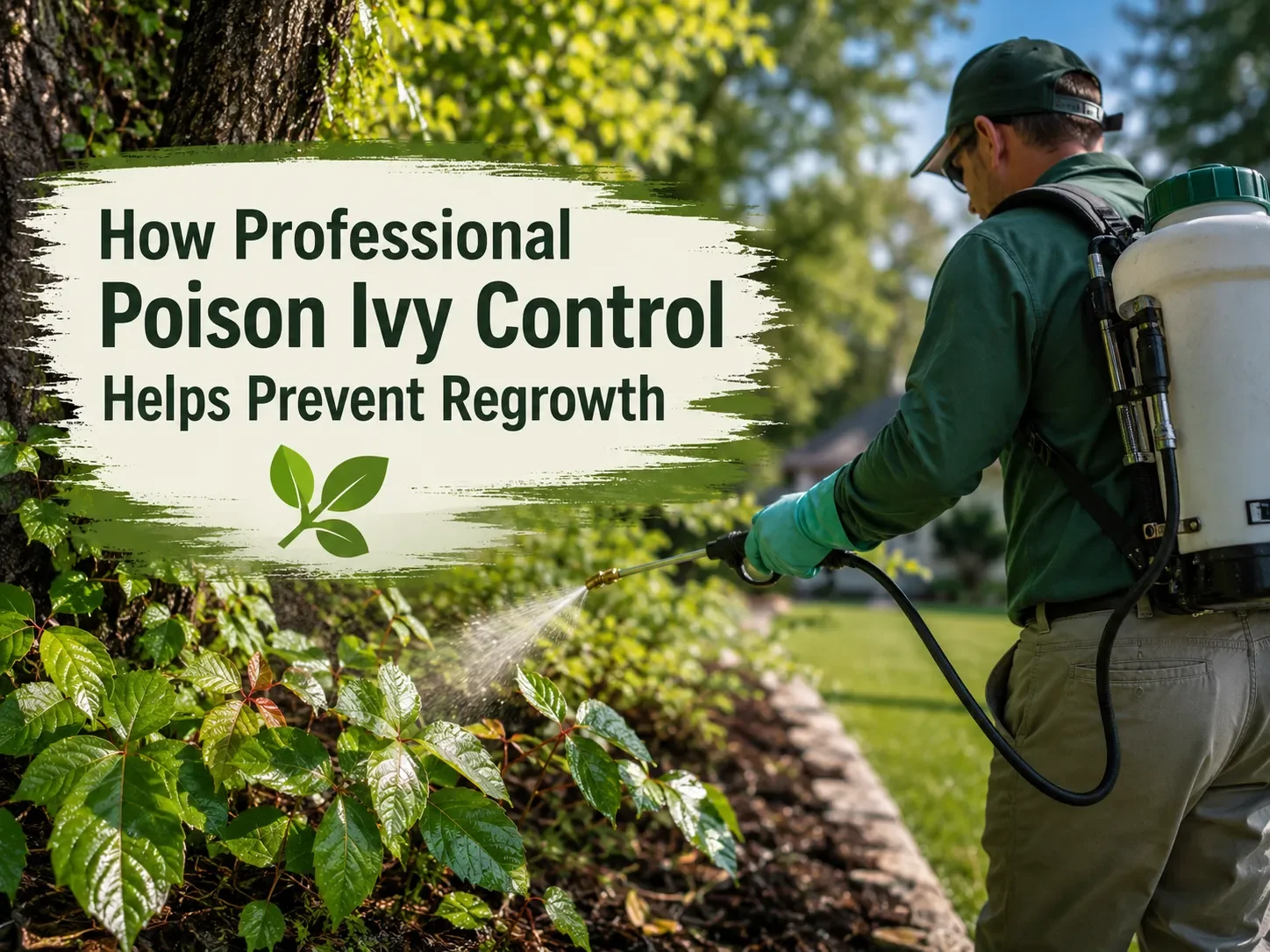
A trained crew approaches the plant as a system rather than just a surface problem. Professional poison ivy control services in Delaware Valley typically begin with a thorough property assessment to map all growth, including areas that may not be immediately obvious, such as vines climbing tree trunks or patches hidden in dense shrub borders.
From there, the removal process targets the full root structure. Depending on the size and location of the infestation, this may involve manual root extraction, targeted herbicide application at the appropriate time of year, or a combination of both. Late summer and early fall are particularly effective windows for herbicide treatment, as the plant draws nutrients down toward its roots in preparation for winter, carrying applied treatments deeper into the system.
Professional crews also know how to handle and dispose of the plant without causing exposure. Cutting or pulling poison ivy without protective gear transfers urushiol, the oily compound responsible for the rash, to skin, clothing, and tools almost immediately. Improper disposal, particularly burning, releases urushiol into the air and poses a serious respiratory risk. These are hazards that trained professionals are equipped to manage.
How Many Treatments Does It Take to Get Rid of Poison Ivy for Good?
There is no honest single-visit guarantee with established infestations. Poison ivy that has been growing for more than one season typically requires follow-up monitoring and at least one additional treatment to catch any regrowth from surviving root fragments or newly dropped seeds.
A well-structured poison ivy control in Delaware Valley program includes an initial removal, a follow-up inspection roughly four to six weeks later, and then seasonal monitoring to catch new growth early before it has time to establish. Addressing a small resprout in spring is far simpler than managing a fully developed plant by midsummer.
Is Professional Poison Ivy Control Worth the Cost for Homeowners?
For properties with established vines, wooded borders, or areas where children and pets spend time, the answer is yes. The cost of professional removal is modest when weighed against the alternative: repeated DIY attempts that carry real injury risk, lost weekends, and the ongoing frustration of watching the plant return.
Beyond the obvious health concern, poison ivy control services in Delaware Valley also protect property value. Overgrown vines damage fences, climb and stress trees, and make outdoor spaces unusable. A professionally cleared yard is genuinely more functional and safer for everyone on the property.
Homeowners who have tried cutting it back themselves and watched it return every spring already know that partial removal is not the same as control. A professional service brings the tools, the timing, and the follow-through to make removal stick.
When Is the Best Time to Schedule Poison Ivy Control in Delaware Valley?
Spring and early summer are the most practical times for most homeowners because the plant is actively leafing out and easy to identify. Late summer through fall is the most effective window for herbicide-assisted treatment when the roots are pulling resources downward. Either way, acting before the plant reaches full growth for the season reduces the scope and difficulty of removal.
If your property has visible vines, ground-spreading patches, or plants climbing along fence lines or tree bases, now is the time to get ahead of it. The Safe Acres team specializes in poison ivy control in Delaware Valley for residential and commercial properties, offering thorough removal with the kind of follow-up that actually prevents the plant from re-establishing. A call early in the season is the most effective investment a homeowner can make against a plant that rewards inaction with bigger problems every year.