Why Homeowners Should Avoid Burning Poison Ivy Plants
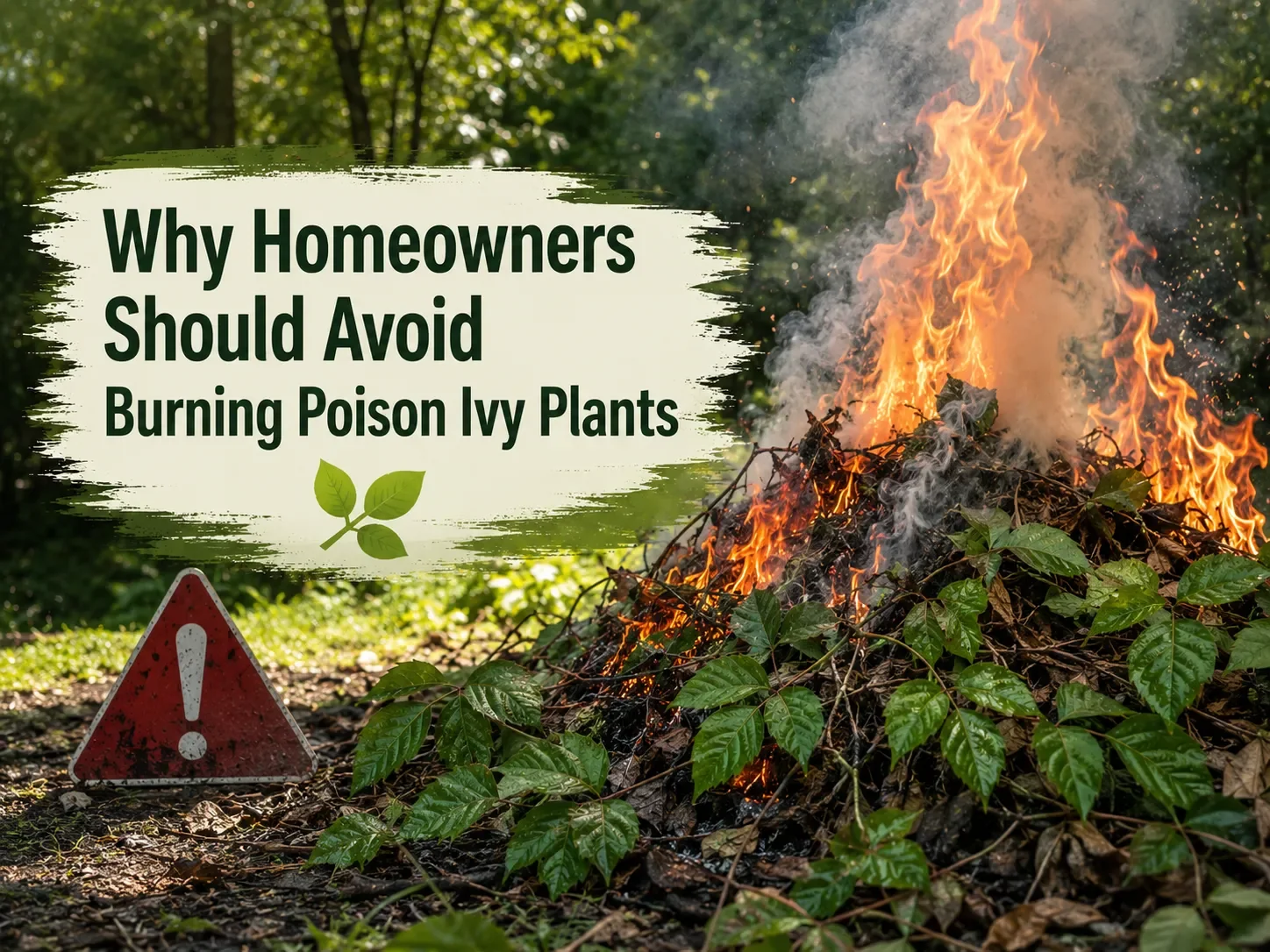
Every spring, the same scene plays out across Pennsylvania backyards. A homeowner spots a patch of poison ivy creeping along the fence line, pulls on a pair of gloves, cuts it back, and decides the fastest way to finish the job is to burn the pile. It seems reasonable enough. The plant is dead, the leaves are dry, and the fire takes care of it in minutes. The problem is that burning poison ivy does not neutralize it. It weaponizes it.
If you are researching poison ivy treatment for homeowners in Pennsylvania, understanding why burning is the one method you should never attempt is a good place to start.
What Happens When You Burn Poison Ivy?
The rash from poison ivy is caused by urushiol, a colorless oil found in every part of the plant, including leaves, stems, roots, and berries. When you burn the plant, urushiol does not break down in the heat. Instead, it binds to smoke particles and becomes airborne. Anyone within range of that smoke can inhale it directly into the nasal passages, the throat, and the lungs.
Burning releases urushiol into the air and can result in skin exposure and severe lung reactions. Firefighters and forest management personnel frequently develop reactions to urushiol carried by smoke particles. For a homeowner burning a small pile in the backyard, the exposure is just as real and can happen without any awareness that something is wrong until symptoms appear hours later.
How Serious Is Inhaling Poison Ivy Smoke?
Serious enough to require emergency care. When poison ivy is burned, the urushiol becomes airborne. Inhaling this smoke can lead to a rash forming on the lining of the lungs, resulting in extreme pain and severe respiratory difficulties, a condition often described as chemical pneumonitis, which causes significant inflammation and damage to lung tissue.
External rashes from skin contact are uncomfortable and can take weeks to resolve. An internal reaction affecting the lungs is in a different category entirely. Swelling in the airways can restrict breathing, and in severe cases it becomes a medical emergency. If you have been exposed to the smoke of burning poison ivy, seek immediate medical attention.
This is not a theoretical risk. It applies to anyone standing downwind of the fire, including children playing in the yard and neighbors on the other side of the fence.
Does Burning Kill the Urushiol or Just Spread It?
It spreads. Smoke particles and ash can carry the urushiol oil, causing internal as well as external danger. The CDC's National Institute for Occupational Safety and Health is direct on this point: do not burn plants or brush piles that may contain poison ivy, poison oak, or poison sumac, as inhaling smoke from burning plants can cause severe allergic respiratory problems.
One important detail that catches homeowners off guard is that urushiol remains active long after the plant dies. The oil on dead vegetation can still be active for one to five years. Burning dried plant material from a previous season does not make it safer. The urushiol is still present.
This is one of the most common misconceptions behind why poison ivy treatment for homeowners in Pennsylvania done incorrectly tends to make the situation worse rather than better.
What Should You Do With Poison Ivy Instead of Burning It?
Bagging and disposal is the standard alternative for smaller patches. Cut the plant while wearing long sleeves, disposable gloves, and eye protection, seal everything in heavy-duty plastic bags, and put it out with regular yard waste. Do not compost it. Wash all tools, clothing, and gloves separately immediately after.
For larger infestations or established vines, the safest path is professional removal. Trained crews have the protective equipment and disposal methods to handle the plant without personal exposure. They also address the root system, which is the part that causes poison ivy to return season after season even when the visible growth is removed.
If you are also dealing with a rash from prior contact, home care with calamine lotion, cool compresses, hydrocortisone cream, and oral antihistamines handles most mild cases. A physician visit is worth scheduling for anything that spreads to the face or eyes, produces significant swelling, develops blisters with signs of infection, or does not begin improving within two weeks.
When Should Pennsylvania Homeowners Call a Professional?
When the infestation covers a significant area, when vines have climbed trees or structural surfaces, or when anyone in the household has a history of severe reactions, professional removal is the practical choice. Attempting to clear a large established patch without proper equipment puts everyone in the yard at risk.
For poison ivy treatment for homeowners in Pennsylvania, the Safe Acres team works with residential properties across the state to safely remove and manage poison ivy without burning, without unnecessary chemical use, and with the follow-up monitoring that keeps it from coming back. Getting help early in the season, before a small patch becomes a large one, is the most straightforward way to protect your property and your family.
Burning might feel like the fastest solution, but it trades a yard problem for a health crisis. For poison ivy treatment for homeowners in Pennsylvania, there are better options, and using them makes a real difference.