Never Burn Poison Ivy in Southeast Pennsylvania
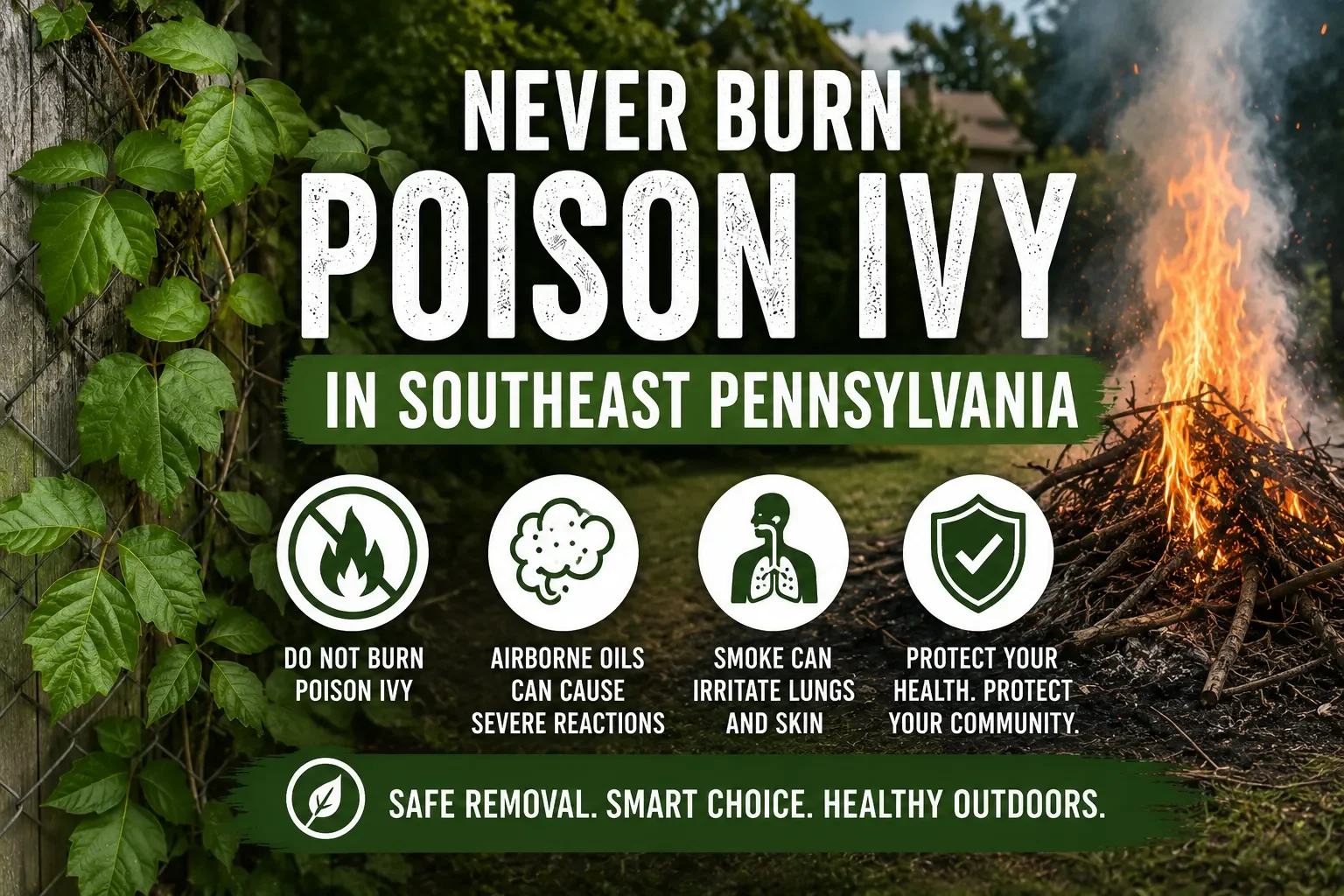
Every fall, Southeast Pennsylvania homeowners start clearing their yards. Brush piles grow. Fire pits get used. And somewhere in that cleanup routine, a dangerous mistake gets made more often than most people realize: poison ivy ends up in the fire.
If there is one piece of advice worth remembering before your next yard cleanup, it is this. Burning poison ivy is not just ineffective. It is genuinely dangerous, and in some cases, it has been fatal. Professional poison ivy removal in Southeast Pennsylvania exists precisely because this plant requires a level of care that goes well beyond pulling it out and throwing it on a brush pile.
Why Is Burning Poison Ivy So Dangerous?
Poison ivy contains urushiol, an oily resin present in every part of the plant, including dead vines, roots, and stems that have been sitting in the soil for months. When the plant burns, urushiol does not disappear. It becomes airborne in the smoke.
The Centers for Disease Control and Prevention (CDC.gov) explicitly warns that inhaling smoke from burning poison ivy can cause severe allergic respiratory problems. The oil travels into the nasal passages, the throat, and the lungs, triggering the same immune reaction as skin contact but internally.
A rash on your arm is uncomfortable. A rash forming on the lining of your lungs is a medical emergency. The American Poison Control Center confirms that burning releases urushiol into the air and can result in serious lung reactions. Cases have been documented where urushiol smoke inhalation contributed to cardiopulmonary arrest.
What Happens If You Accidentally Inhale Poison Ivy Smoke?
Symptoms may not appear immediately. Urushiol reactions can take hours to several days to develop. Once they do, inhaled urushiol can cause swelling of the airways, difficulty breathing, chest tightness, and in severe cases, pulmonary edema, a dangerous accumulation of fluid in the lungs.
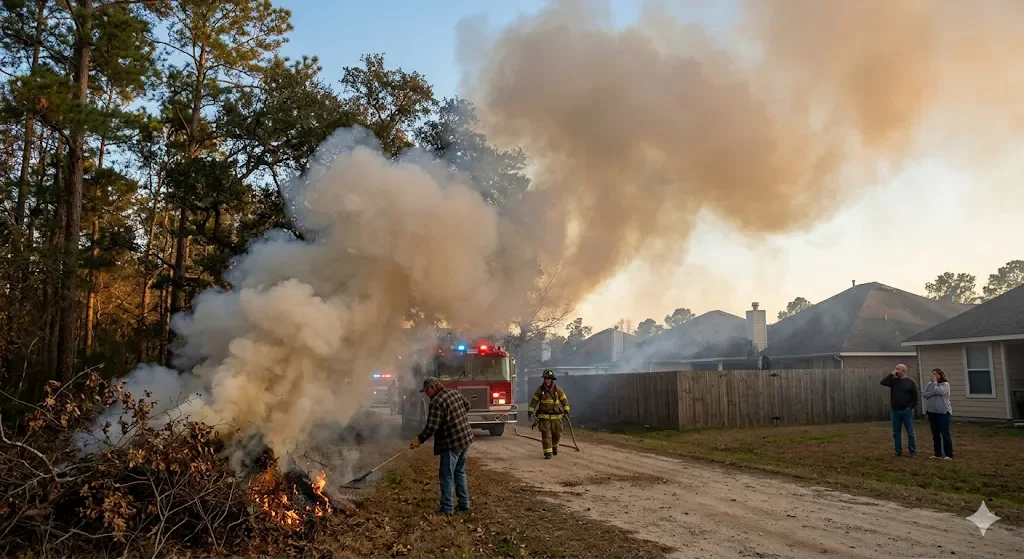
If you have inhaled smoke from a fire that may have contained poison ivy, do not wait for symptoms to worsen. Seek medical attention right away. Emergency care can address respiratory reactions before they progress.
This risk applies to bystanders, not just the person tending the fire. Neighbors, children playing nearby, and anyone downwind of a burning brush pile can inhale the smoke.
Does Burning Poison Ivy in a Fire Pit Kill the Plant?
No. This is one of the most common misconceptions that leads homeowners into trouble. Burning removes what you can see above ground, but urushiol survives in the root system underground. The plant regrows from those roots in the following season.
So burning poison ivy accomplishes two things: it fails to eradicate the plant, and it creates a respiratory hazard in the process. It is the worst possible combination of ineffective and dangerous.
How Should You Dispose of Poison Ivy Cuttings Safely?
Seal all cut plant material, roots included, in heavy-duty plastic bags immediately after removal. Do not compost it. Do not add it to a yard debris pile. Place the sealed bags in your regular household trash for municipal disposal.
The CDC also recommends cleaning all tools that contacted the plant with rubbing alcohol. Urushiol remains active on tool surfaces, gloves, and clothing for up to five years, so anything that touched the plant should be treated as contaminated until properly cleaned or disposed of.
Never shake out clothing worn during removal before washing. Launder it separately in hot water.
When Should You Call a Professional for Poison Ivy Removal?
When the growth is established, climbing, extensive, or in a location where burning might seem like an easy solution. These are exactly the situations that lead to accidental smoke exposure.

Professional poison ivy removal in Southeast Pennsylvania addresses the full plant, roots and all, without creating a fire hazard or leaving contaminated debris behind. A trained crew bags and removes all plant material correctly, treats cut surfaces with targeted herbicide to prevent regrowth, and follows up to check that the root system was fully cleared.
For homeowners dealing with recurring growth year after year, or with poison ivy in wooded corners of the property where yard cleanup instinctively involves fire, professional poison ivy removal is the approach that removes the risk entirely. Both the plant and the temptation to burn it.
Is Burning Yard Debris With Poison Ivy a Legal Issue in Pennsylvania?
Open burning regulations vary by municipality across Southeast Pennsylvania, and some jurisdictions restrict it outright. Beyond local ordinances, knowingly burning poison ivy in a way that creates a hazard for neighbors could carry civil liability if someone suffers a respiratory injury as a result.
The cleaner path, legally and medically, is proper disposal through professional poison ivy removal in Southeast Pennsylvania rather than burning.
