Should Homeowners Remove Poison Ivy or Hire Professionals?
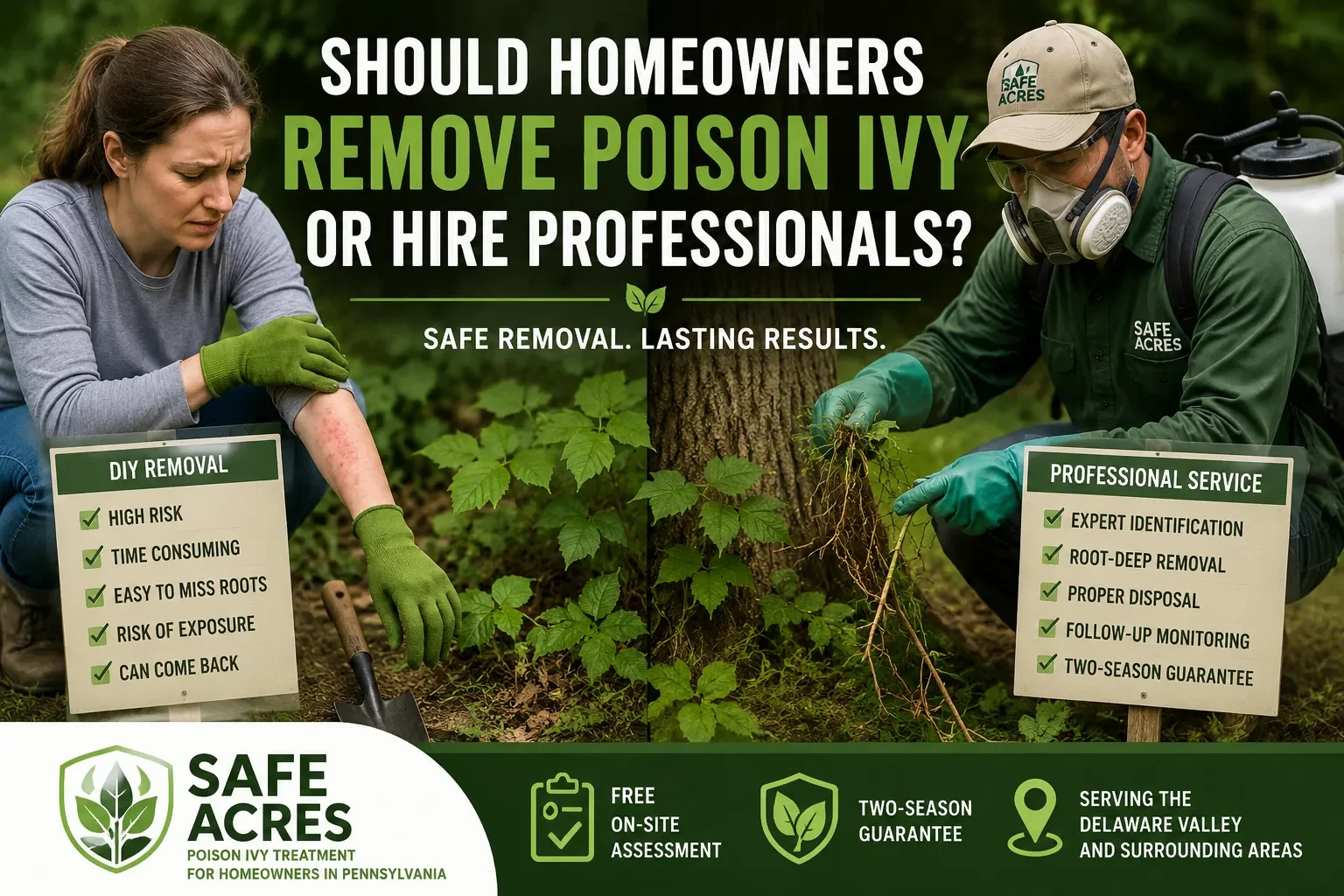
Every spring, Pennsylvania homeowners face the same question. The poison ivy is back, and so is the decision: handle it yourself or call someone who knows what they are doing? Poison ivy treatment for homeowners in Pennsylvania is not a one-size-fits-all answer. The right choice depends on the size of the problem, your sensitivity to urushiol, and how confident you are that you can remove the full root system without exposing yourself or your family in the process.
Here is a clear, honest breakdown of both options.
What Happens If You Touch Poison Ivy Without Knowing?
The plant's oil, urushiol, causes an allergic skin reaction called contact dermatitis. It produces redness, intense itching, and fluid-filled blisters that can last two to three weeks without treatment. According to the Centers for Disease Control and Prevention (CDC.gov), exposure to an amount of urushiol smaller than a grain of salt causes a rash in 80 to 90 percent of adults.
What catches most people off guard is that urushiol does not just transfer from plant to skin. It transfers from plant to gloves, tools, clothing, and pet fur, and it remains active on those surfaces for up to five years. A pair of contaminated gardening gloves stored in a shed can cause a reaction the following season.
Can You Safely Remove Poison Ivy Yourself?
Yes, under the right conditions. DIY removal works best when the plant is young, small, and growing in an open, accessible spot away from other vegetation. Here is what that process looks like when done correctly:
Wear waterproof gloves, long sleeves, pants, and closed-toe shoes. Use gardening tools rather than bare hands. Dig down to extract the full root system rather than pulling stems at the surface. Seal all plant material, roots included, in heavy trash bags immediately. Never burn poison ivy. The CDC warns that burning releases urushiol into the air as smoke, which can cause severe respiratory reactions when inhaled.
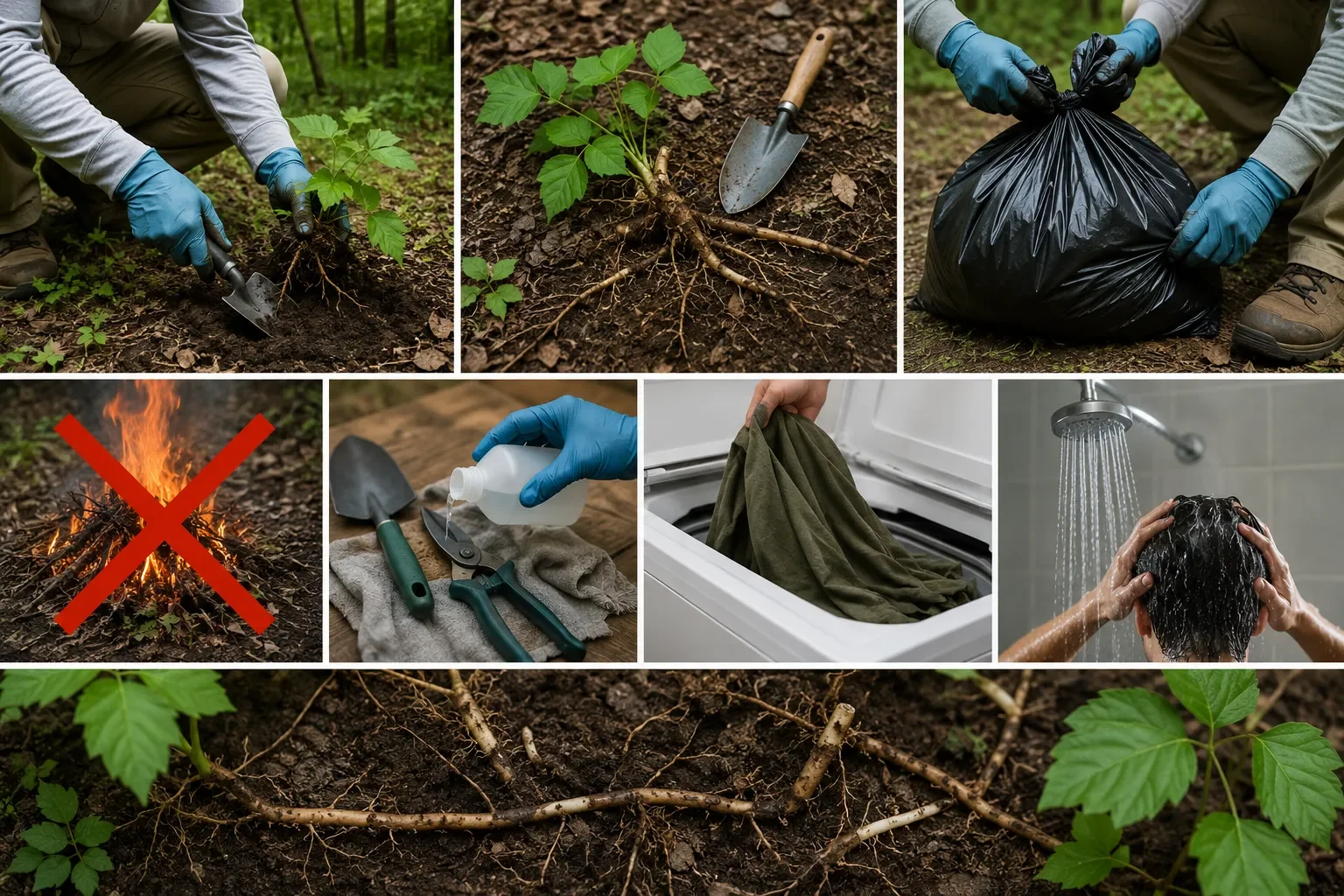
Wash all tools with rubbing alcohol afterward. Launder clothing separately in hot water. Shower with soap and cool water as soon as you are finished.
The honest limitation: if you miss even a small section of root, the plant comes back. Poison ivy roots spread wide and shallow underground, and a single overlooked fragment is enough to restart the growth cycle.
When Does DIY Removal Stop Being a Good Idea?
When the infestation is established, recurring, or in a hard-to-reach spot. Vines that have climbed trees, spread along fence lines, or grown through shrubs require more than a single afternoon of careful pulling. The root network under mature growth is extensive, and getting it all without professional equipment is genuinely difficult.
Homeowners who are highly sensitive to urushiol, have young children or pets using the yard regularly, or have dealt with the same patches returning year after year are the exact situations where poison ivy treatment for homeowners in Pennsylvania shifts from a DIY question to a professional one.
What Does a Professional Poison Ivy Service Actually Do?
A trained crew brings the right protective equipment, the knowledge to identify the plant in all growth stages, and the technique to remove it root-deep without spreading the oil to surrounding plants or soil. They treat the cut vine stumps with targeted herbicide, dispose of all plant material safely, and return for follow-up visits to catch any regrowth before it re-establishes.
This is not the same as a general landscaping crew pulling visible vines. Proper poison ivy treatment for homeowners in Pennsylvania means addressing the entire root system and monitoring through the growing season, because seeds carried onto the property by birds will continue to introduce new growth regardless of how thorough the initial removal was.
Is Hiring a Professional Worth the Cost?
For a small, isolated patch caught early: possibly not, if you are willing to be thorough and careful. For anything larger, recurring, or near areas where children and pets spend time: yes, the investment is practical.
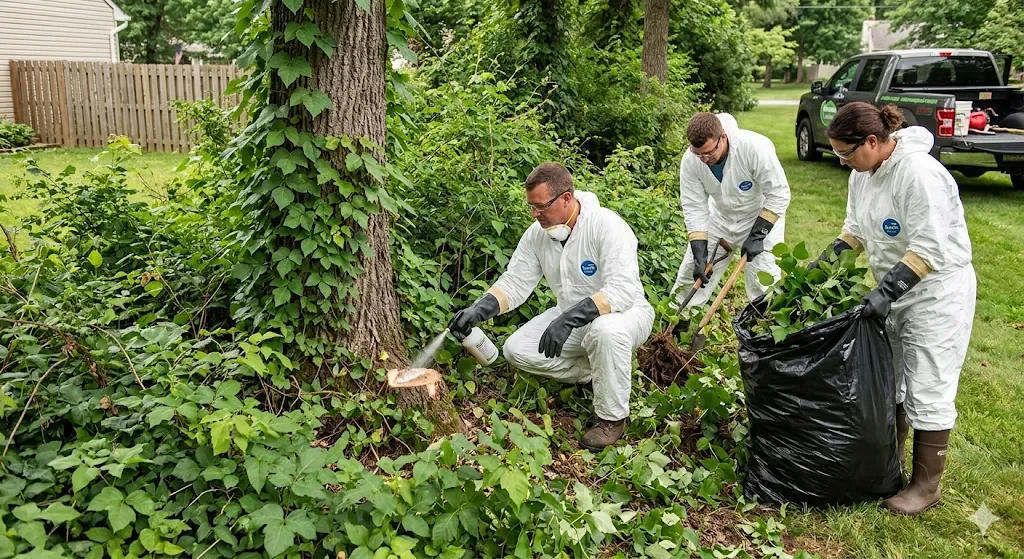
The real cost of DIY removal is not always measured in dollars. A significant urushiol exposure means a doctor visit, a prescription for oral corticosteroids, and two to three weeks of discomfort. When you weigh that against the cost of professional poison ivy treatment for homeowners in Pennsylvania, the calculation often favors calling someone who does this every day.
Who Handles Poison Ivy Removal in Pennsylvania?
Not every landscaping company is trained specifically for poison ivy. Look for a crew with experience in targeted removal, proper disposal protocols, and a follow-up monitoring plan. Those details are what separate a temporary fix from a lasting one.
Safe Acres provides poison ivy treatment for homeowners in Pennsylvania across the Delaware Valley, with a two-season guarantee on all treatments and a free on-site assessment before any work begins.