What Is the Best Way to Kill Poison Ivy on Residential Land?

Poison ivy is one of those plants that does not take hints. You pull it. It comes back. You spray it. Three weeks later it is pushing through the same spot. For homeowners in the region, poison ivy treatment in Southeast Pennsylvania is a real, ongoing challenge, and doing it right means understanding both the plant and your options.
Here is a clear, practical breakdown of what works, what does not, and when to call it.
How Do You Identify Poison Ivy Before You Touch It?
The classic rule still holds: leaves of three, let it be. Poison ivy grows as a ground cover, a shrub, or a climbing vine. The leaves are pointed, often glossy, and come in clusters of exactly three. In spring the leaves have a reddish tint. By summer they go green. In fall they turn yellow, orange, or red.
The tricky part is that the plant blends in well. It climbs tree trunks using small hairy-looking rootlets and spreads along fence lines where it can go unnoticed for months. If you are not sure what you are looking at, do not touch it.
What Makes Poison Ivy So Hard to Kill?
The root system. Poison ivy spreads through shallow, wide-running underground rhizomes. When you remove the visible growth and leave roots behind, those roots send up new shoots. That is why single-season removal rarely solves the problem.
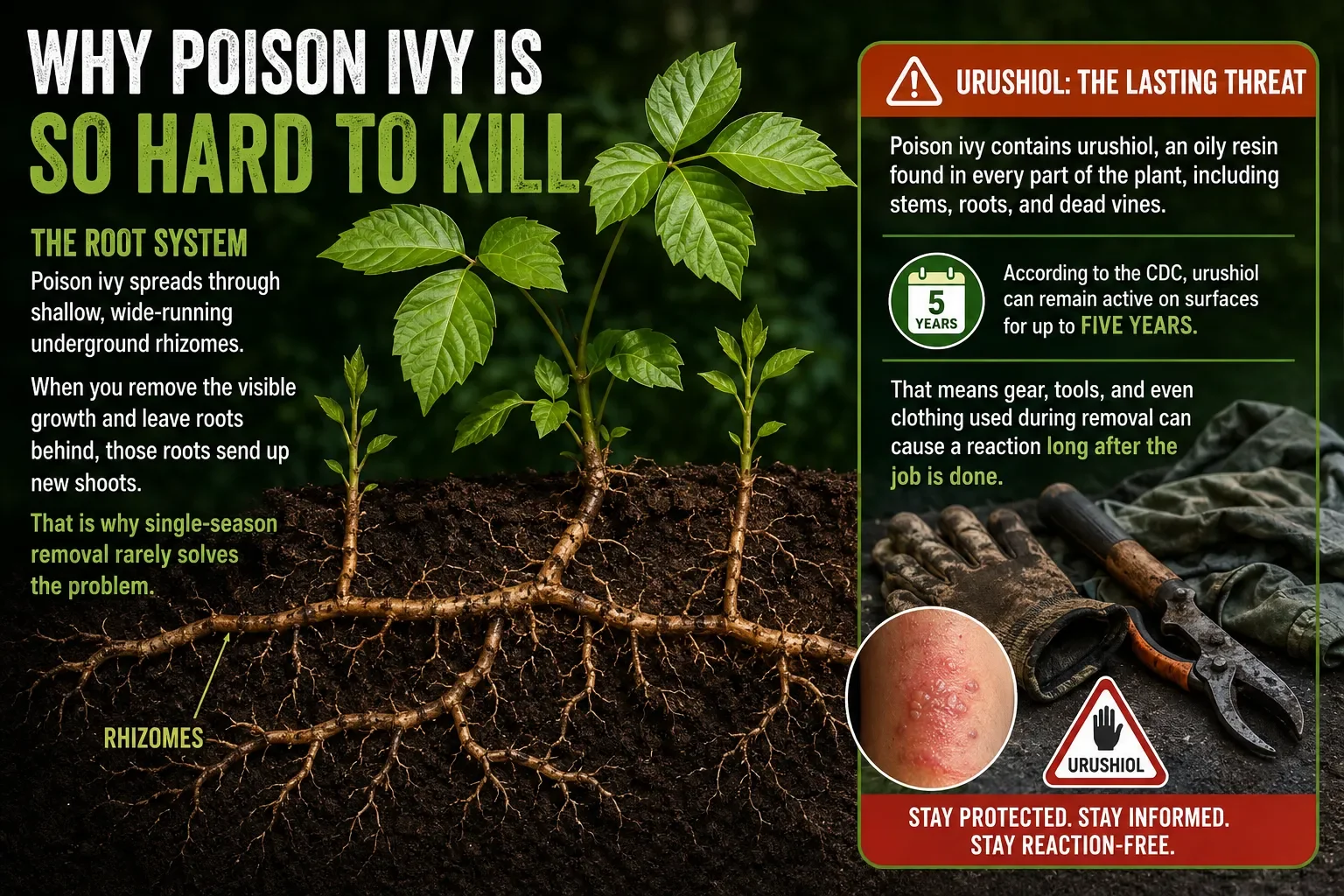
The plant also contains urushiol, an oily resin found in every part of the plant, including stems, roots, and dead vines. According to the Ceters for Disease Control and Prevention (CDC.gov), urushiol can remain active on surfaces for up to five years. That means gear, tools, and even clothing used during removal can cause a reaction long after the job is done.
Does Pulling Poison Ivy by Hand Actually Work?
For small, young plants caught early, hand removal can work. The key is getting the roots. Use waterproof gloves, long sleeves, and eye protection. Dig down several inches to reach below the root zone rather than simply pulling the stems. Seal everything in heavy-duty trash bags immediately. Do not compost it.
The limitation is obvious: any root fragment left in the soil will regrow. For established plants with a wide root network, hand removal alone is rarely enough.
What Herbicides Work Best on Poison Ivy?
Systemic herbicides are the most effective chemical option because they travel through the plant to reach the roots. The University of Georgia Cooperative Extension identifies glyphosate and triclopyr as the most reliable active ingredients for poison ivy control. Triclopyr is generally preferred near lawns because it targets broadleaf plants without killing grass.
Apply herbicide on a warm, dry day when the plant is actively growing. Late spring through early summer is the best window. Multiple applications are usually necessary for mature, well-rooted plants. Treat any regrowth promptly at the full-leaf stage.
One firm rule: never burn poison ivy. The FDA (fda.gov) warns that burning releases urushiol into the air as smoke, which can cause severe respiratory reactions when inhaled.
Do Natural Remedies Actually Kill Poison Ivy Permanently?
Vinegar, salt, and boiling water will burn back above-ground growth. They do not reach the root system. That means the plant regrows from below, often within a few weeks. Natural methods work for very young, isolated plants but are generally not reliable for anything established.
If your goal is permanent removal, a root-reaching approach is required.
When Is Poison Ivy Treatment in Southeast Pennsylvania Best Left to Professionals?
This is where most homeowners eventually land. When poison ivy is growing through established shrubs, along long fence lines, up mature trees, or in areas used by children and pets, the risk of incomplete removal or personal exposure rises significantly.
Proper poison ivy treatment in Southeast Pennsylvania, done professionally, involves full root extraction, safe disposal, and follow-up monitoring to catch any regrowth before it re-establishes. That combination is difficult to replicate as a weekend DIY project, especially for larger or recurring infestations.
For any homeowner dealing with annual regrowth in the same spots, or growth that has spread beyond one manageable patch, professional treatment is the more cost-effective long-term solution.
What Should You Do After Poison Ivy Removal?
Whether you handled it yourself or hired a crew, monitor the cleared area through the rest of the growing season. New shoots from surviving root fragments are small and easy to miss until they are not. Treat regrowth at the first sign. Clean all tools with rubbing alcohol after every contact.
Wash any clothing that touched the plant separately in hot water. The oil transfers easily and does not wash out in a standard cold cycle.
Poison ivy treatment in Southeast Pennsylvania does not have to be a seasonal battle. The right approach, applied once with follow-through, can clear a property for good.